Garden Maintenance Seven Sisters: Recycling and Sustainability
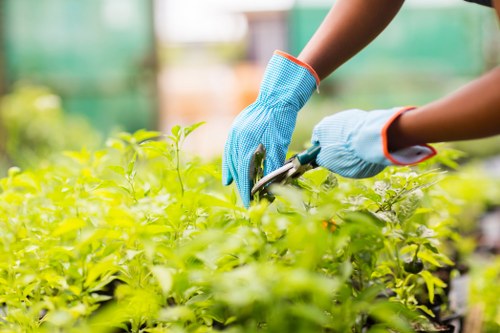 Garden Maintenance Seven Sisters is committed to creating an eco-friendly waste disposal area and a sustainable rubbish gardening area across local front and back gardens. Our approach to sustainable garden upkeep in Seven Sisters blends practical recycling measures with low-carbon service delivery so residents get tidy outdoor spaces without compromising the environment. We prioritise waste reduction, reuse and responsible disposal in every maintenance visit.
We set an ambitious recycling percentage target to guide our work: a 65% reuse and recycling rate by 2028 across all garden maintenance operations in Seven Sisters and nearby neighbourhoods. This recycling goal covers green waste, soils, timber, and reusable garden fixtures recovered from routine clearances. Reaching 65% will require coordination with borough waste strategies, community partners and efficient on-street handling of materials.
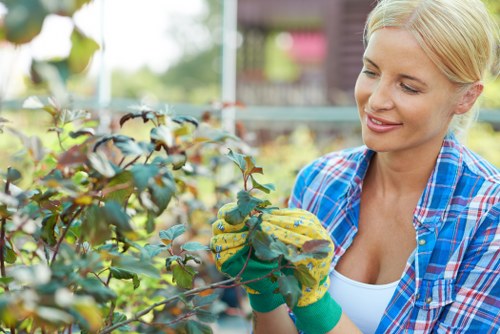 Our teams follow the local boroughs’ approach to waste separation: we segregate green waste, food scraps (where present), mixed recycling and non-recyclable rubbish at source. The local councils in the area, including Haringey and neighbouring boroughs, typically operate separate collections for garden waste and food waste and provide clear guidance on glass, paper, metal and plastics — we align our on-site sorting with those systems to reduce contamination and increase recycling value.
To make disposal and recovery straightforward, we use nearby household waste recycling centres and local transfer stations as part of our logistics plan. We direct appropriate materials to civic amenity sites and transfer facilities that accept compostable green waste, inert soils and construction-type waste from garden renovations. These local transfer stations help minimise round-trip haulage and ensure materials go to the correct processing stream rather than landfill.
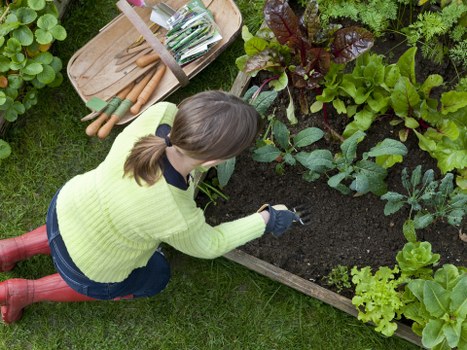 Our sustainable gardening area practices include on-site mulching, chipping of woody material, and composting of soft green trimmings where space and client permissions allow. Mulched bark and chipped branches are often reused on paths and beds, reducing the need for new materials. Where composting is not feasible, green waste is boxed separately for the council or certified composting facilities.
We also emphasise salvage and reuse. Salvageable paving, bricks, timber sleepers and planters are set aside for redistribution. Reusing materials reduces embodied carbon and diverts items from disposal streams. When items are in good condition, we partner with local charities and reuse networks to find new homes for furniture, pots and surplus building materials.
Partnerships with charities are central to our sustainable model. We work with community groups, reuse organisations and local social enterprises to channel usable items from clearances into benefit for residents. Charity partnerships can include donating plant stock to community gardens, sending reusable furniture and pots to local reuse centres, and collaborating on volunteering days to regenerate public green spaces.
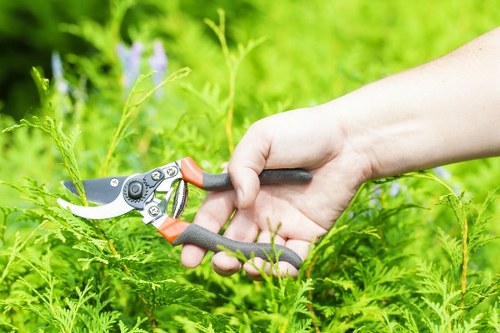 In addition to reuse and recycling, we operate a low-emission fleet tailored for urban work. Our low-carbon vans — primarily electric and hybrid vehicles — reduce local air pollution and lower the carbon footprint of transporting waste and materials around Seven Sisters. These vans are sized to limit unnecessary trips and to comply with emissions standards across London boroughs.
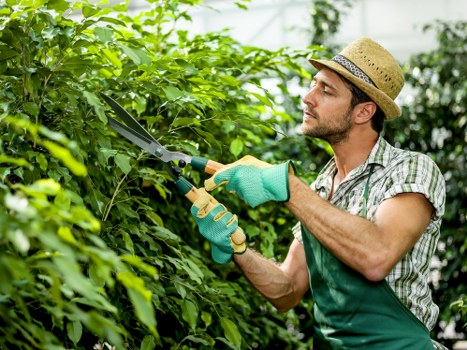 Practical recycling activities we undertake include:
- Segregating green garden waste for composting or certified processing
- Separating clean soil and rubble for reuse in landscaping projects
- Isolating timber for chipping or reuse as edging and raised bed material
- Collecting recyclable containers and plastics to match borough kerbside rules
- Transporting salvageable goods to charity partners or reuse centres
We monitor progress toward our recycling percentage target through tracking systems that record volumes of diverted material versus landfill loads. Regular audits of our garden waste handling help us improve separation efficiency and report on performance. Transparency and measurable targets are important: they allow us to refine routes, reduce contamination and scale up partnerships that boost reuse.
Education is part of our service: our crews can explain the benefits of composting, the value of reusing paving and plants, and why correct separation at source matters. Residents and landlords receive practical advice on how to maintain a low-waste garden — from seasonal mulching to plant selection that reduces maintenance and waste generation.
By combining a clear recycling percentage target, cooperation with local transfer stations, active partnerships with charities and a fleet of low-carbon vans, our Garden Maintenance Seven Sisters services offer a measurable, local model for sustainable garden care. Our mission is to keep outdoor spaces healthy and beautiful while diverting as much as possible from landfill and supporting circular, low-carbon neighbourhoods.